

AIO: SEO FOR THE AGE OF AI SEARCH
Users increasingly get their answers from AI tools and AI summaries. AIO structures your content so LLMs understand, trust and cite it, and lets you decide what they may read. See it running on our Drupal AI demo site.
Traditional SEO is no longer enough
The way users find information has changed. They ask ChatGPT, Claude or Perplexity for answers and read AI-generated summaries on search result pages before they click anything. Being ranked is not the same as being cited. AIO, Artificial Intelligence Optimisation, makes your content easy for large language models to discover, understand and attribute, while keeping control over what they may use.
- llms.txt: a curated map of your site for LLMs, generated from your menus and content, so an assistant finds the right pages first.
- Markdown for every page: a clean, text-only version of each page that models read without the navigation, scripts and layout noise.
- Structured data and metadata: schema.org JSON-LD and AI-aware meta tags, so the facts about your organisation, products and authors are machine-readable.
- Your terms: bot rules, partial exports and LLM-targeted alternative content when the primary content must stay protected.
The first two run on aidemo.brainsum.com, our public Drupal AI demo site, and can be seen without a login.
llms.txt: a map of your site written for assistants
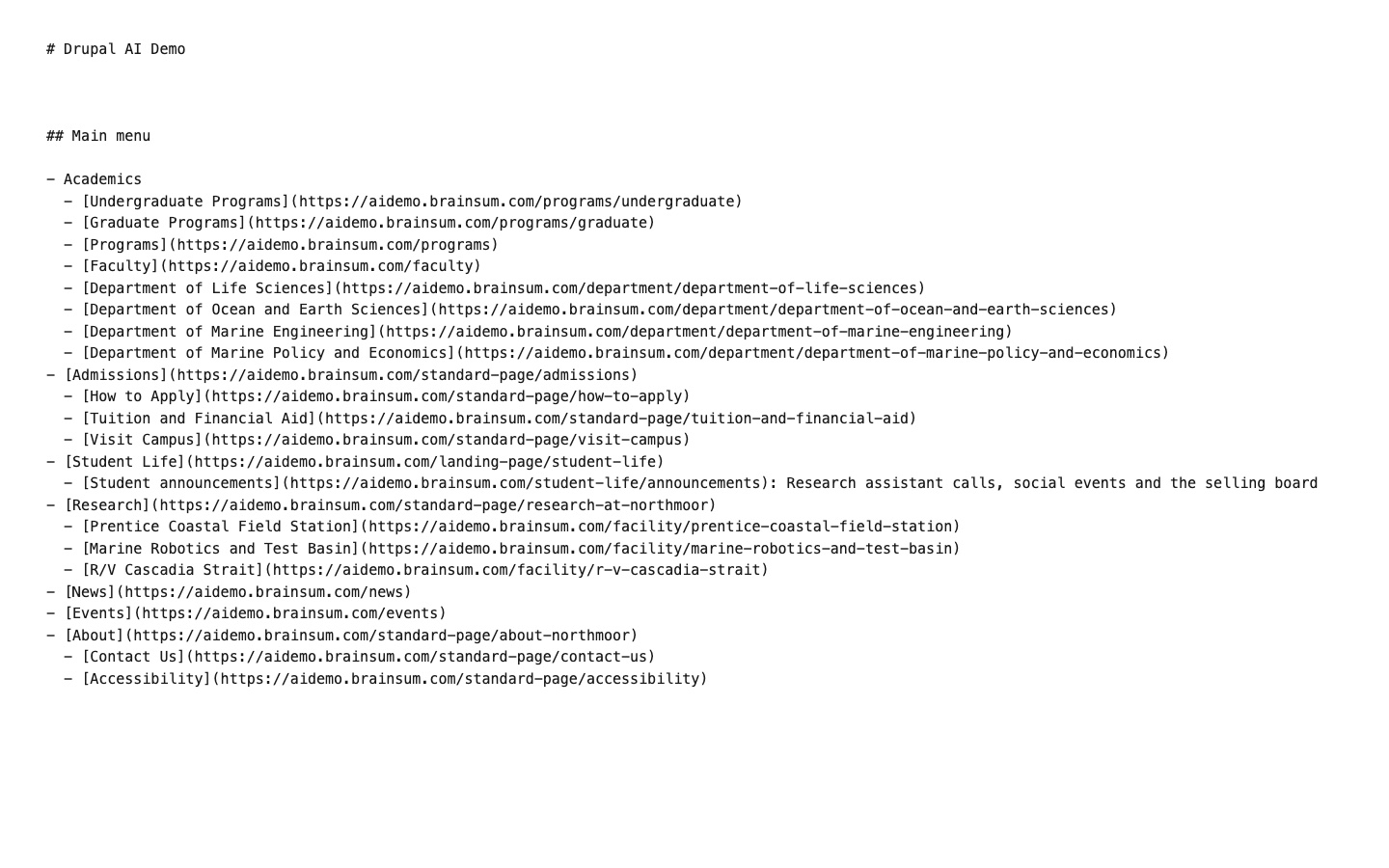
aidemo.brainsum.com/llms.txt is generated by Drupal from the site's menus and content: a Markdown document that lists sections, pages and one-line descriptions with their links. An AI assistant that reads it knows where programs, admissions, research and news live without crawling every page, and your descriptions are the ones it quotes.
The file follows the llms.txt proposal that AI companies and crawlers increasingly honour, and it updates as the site changes. What goes in is editorial: you decide which sections are listed and how they are described.
Markdown for every page, next to the HTML
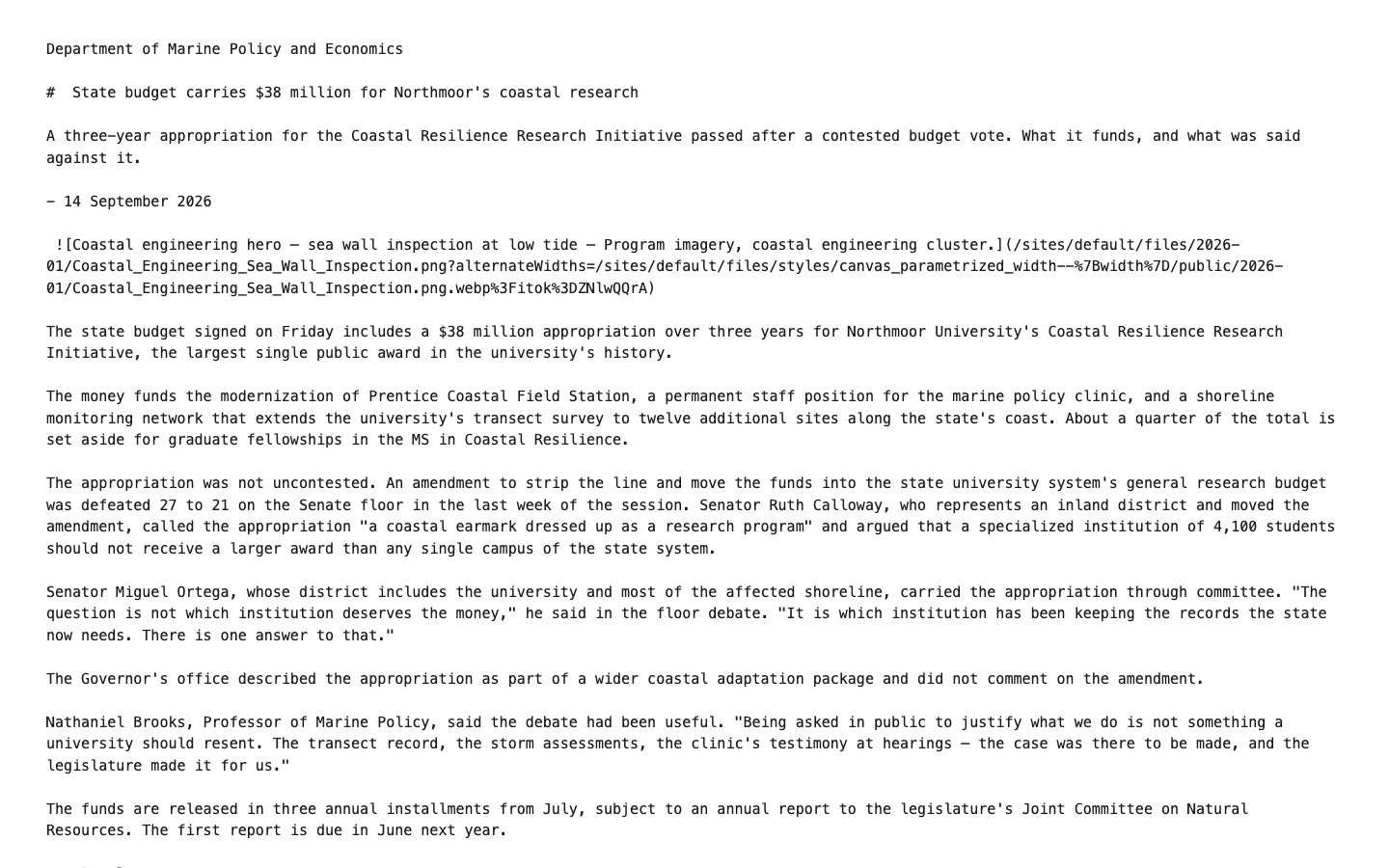
Every page on the demo is also available as Markdown: add .md to the address, or follow the alternate link the HTML page declares. The result is the title, the text, the headings and the links, nothing else. Models get the content without the header, footer, cookie banner and scripts that make HTML expensive and noisy to read, and the HTML page stays as it is for people.
How it works, and why it stays yours
- Generated, not maintained by hand. llms.txt and the Markdown versions come from a recipe that uses your menus, content and fields. Editors keep writing pages; the AI-readable versions follow.
- Structured data from your content model. Schema.org JSON-LD and meta tags are mapped from fields, per content type, so authors, organisations, events, products and FAQs are described the way search engines and assistants expect.
- Control over AI access. ai.txt and robots rules say which bots may read what; partial exports expose summaries or selected sections rather than everything; LLM-targeted alternative content keeps the primary content protected while still being represented.
- Measured. AI crawler traffic is visible in your logs and analytics, and AI SEO analysis tooling in Drupal scores pages for AI readability so you know what to fix first.
- Part of a strategy, not a plugin. We treat AIO as an extension of SEO: content structure, metadata, performance and access rules are planned together, and the plan lives in your site configuration.
See it on the demo, then talk to us
Open the demo's llms.txt and a Markdown page, then tell us which parts of your site AI assistants should cite, and which they should not see. We start with an audit of how your content looks to a model today.